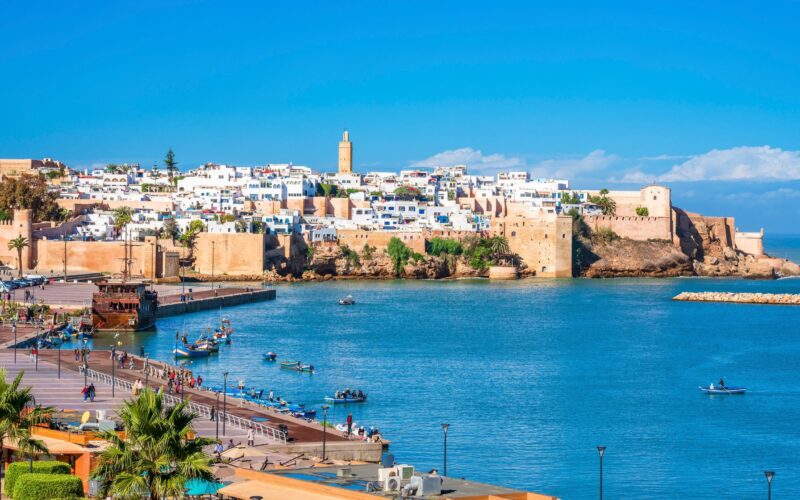

From centuries-old kasbahs to innovative off-grid homes, Morocco has quietly become a living laboratory for sustainable architecture. While sustainability is often associated with cutting-edge technology, many of Morocco’s most effective environmental solutions have existed for generations. Today, architects are rediscovering these traditional techniques and blending them with modern design to create buildings that are both environmentally responsible and culturally authentic.
As climate change reshapes the future of urban development, Morocco offers valuable lessons in designing buildings that work with nature, not against it.
Table of Contents
Why Morocco Is a Natural Leader in Sustainable Architecture
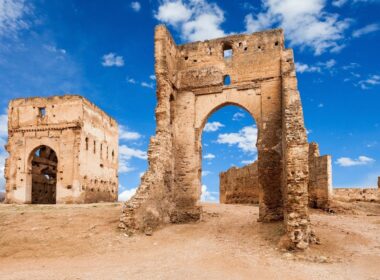
Morocco’s diverse geography, ranging from the Sahara Desert to the Atlas Mountains and Atlantic coastline, has long required architecture that responds intelligently to extreme climates. Before mechanical cooling and modern insulation, Moroccan builders relied on passive design strategies that naturally regulated indoor temperatures while minimizing energy consumption.
Traditional Moroccan architecture demonstrates several sustainable principles:
- Thick earthen walls that provide excellent thermal insulation.
- Interior courtyards that improve natural ventilation.
- Small exterior openings to reduce solar heat gain.
- Locally sourced materials with low environmental impact.
- Compact urban layouts that maximize shade and reduce heat exposure.
These principles remain highly relevant today as architects seek low-carbon alternatives to conventional construction.
Case Study 1: The Kasbahs and Ksour of Southern Morocco
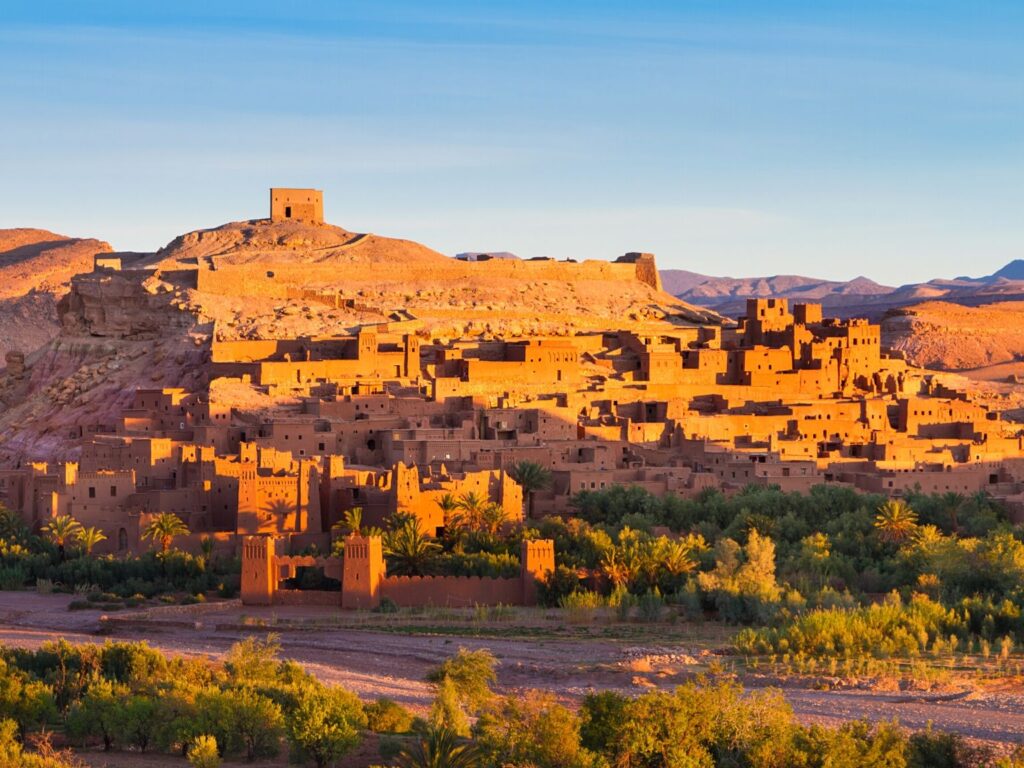
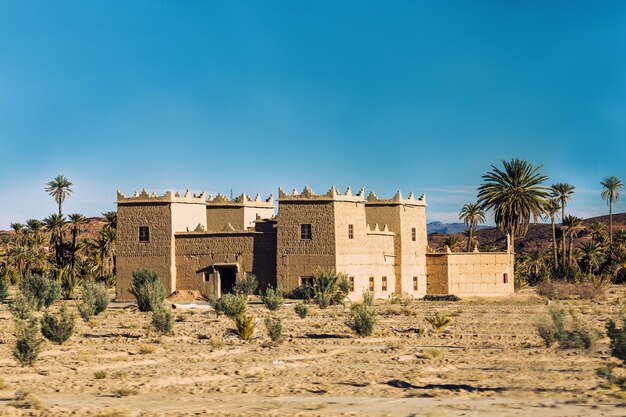
Among Morocco’s greatest examples of sustainable architecture are the historic Kasbahs and Ksour scattered throughout Drâa and Ouarzazate region.
Constructed primarily from rammed earth, adobe, straw, and timber sourced from nearby palm groves, these settlements demonstrate remarkable environmental efficiency.
What Makes Them Sustainable?
Unlike concrete structures that absorb and radiate heat, earthen walls regulate indoor temperatures naturally by storing coolness during the night and releasing it gradually throughout the day.
Other sustainable features include:
- Locally harvested building materials requiring minimal transportation.
- High thermal mass that reduces dependence on heating and cooling.
- Community-based construction methods using traditional craftsmanship.
- Buildings designed for repair rather than demolition.
Recent research has shown that these vernacular settlements also incorporate numerous principles now associated with biophilic design, strengthening the relationship between people, climate, and nature.
Case Study 2: Reviving the Drâa Valley’s Earthen Heritage
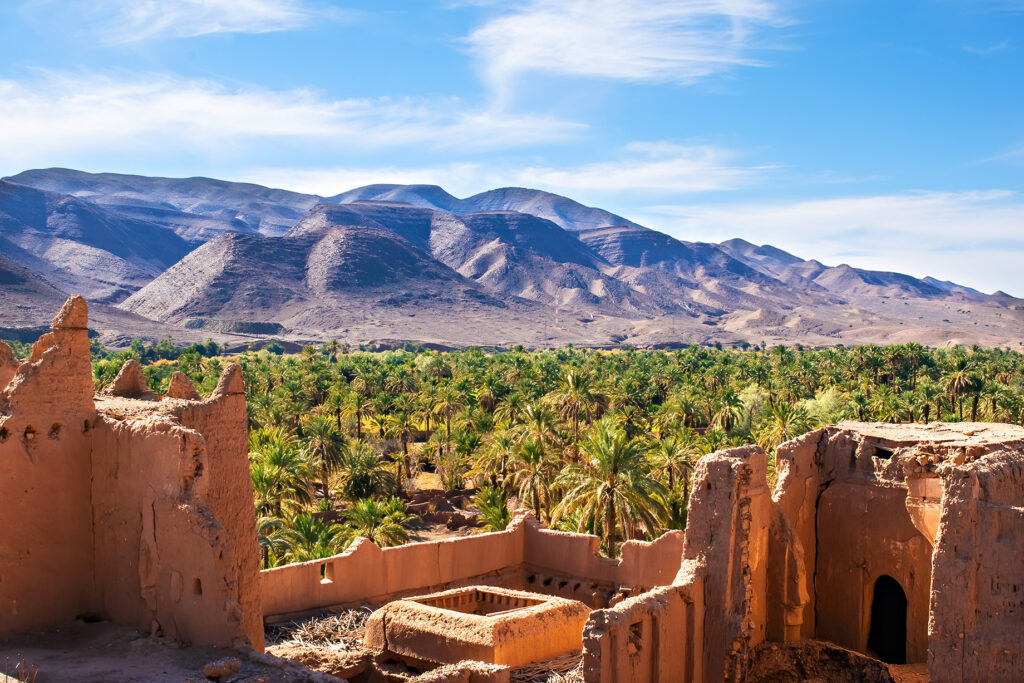
The Drâa Valley contains one of the world’s largest collections of earthen architecture.
Rather than treating these settlements as historical monuments, many architects now view them as models for future sustainable housing.
Traditional construction relies almost entirely on renewable local resources:
- Earth from surrounding landscapes
- Palm wood for roofing
- Lime-based finishes
- Natural ventilation instead of air conditioning
Because the materials are biodegradable and recyclable, the environmental footprint remains exceptionally low compared to conventional concrete construction.
Researchers argue that these techniques deserve renewed attention as modern architects search for affordable, climate-responsive housing solutions.
Case Study 3: Dar El Farina: Off-Grid Living Reimagined
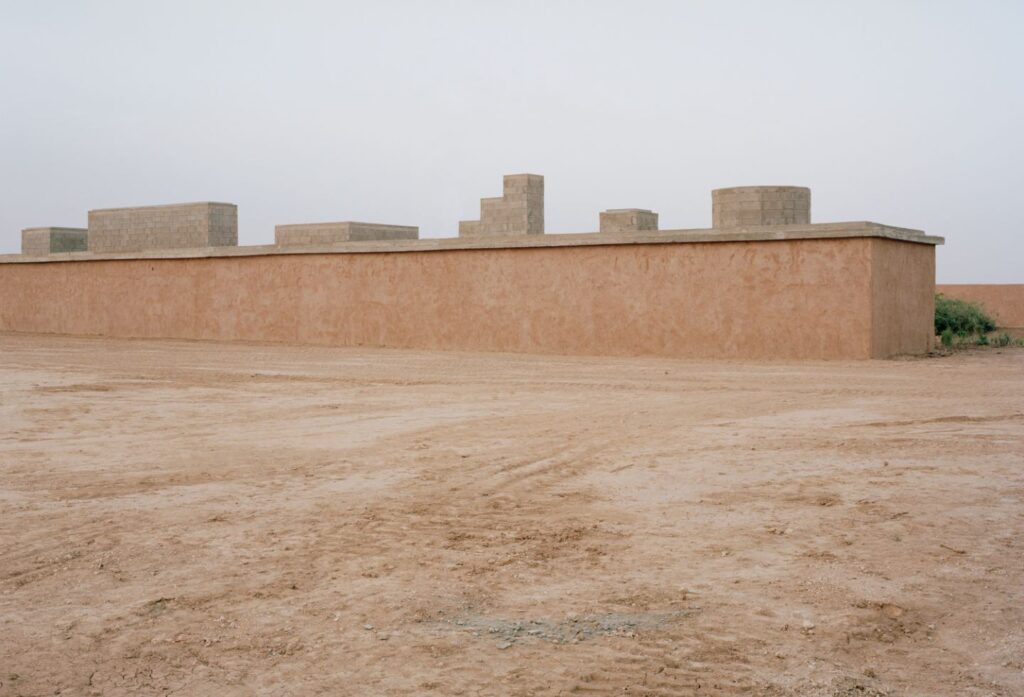
Modern sustainable architecture in Morocco is also embracing innovation.
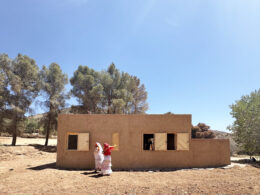
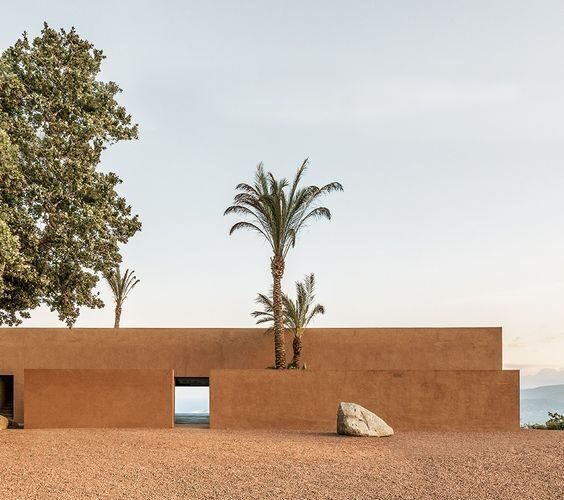
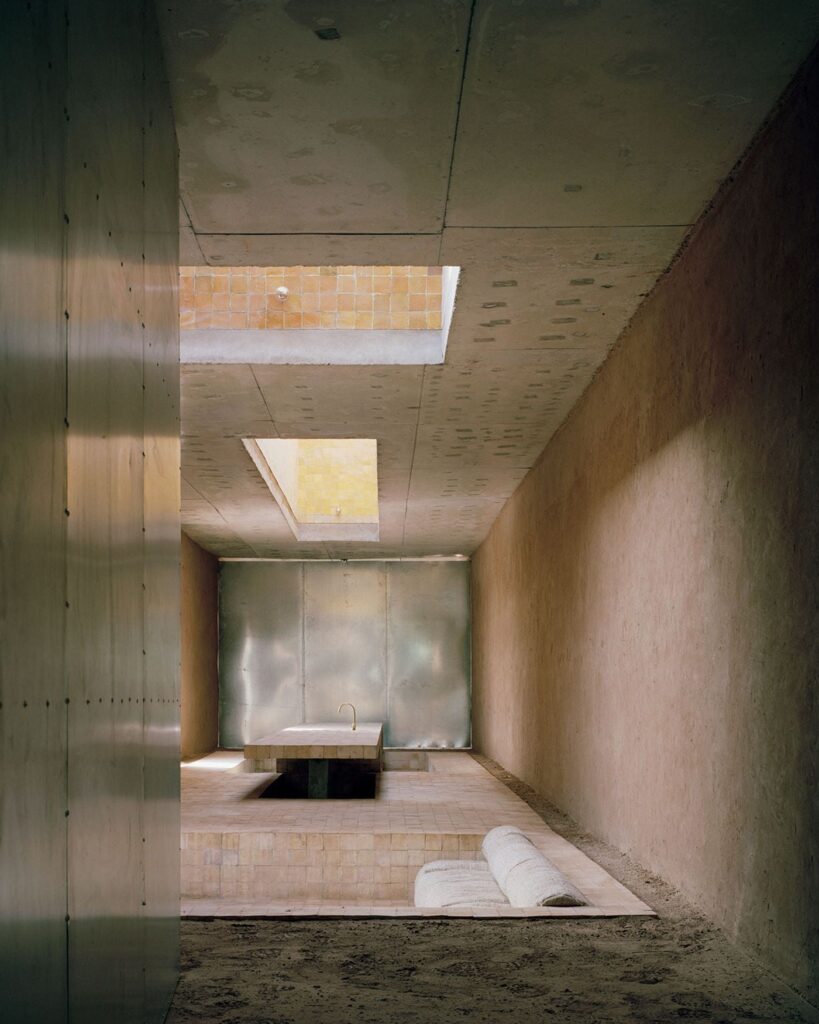
Dar El Farina, designed by Leopold Banchini Architects and Sana Nabaha, demonstrates how contemporary design can respect traditional landscapes while achieving complete energy independence.
Located in Morocco’s arid Haouz plain, the project integrates itself into the surrounding environment instead of dominating it.
Key sustainability strategies include:
- Complete off-grid operation
- Passive cooling through building orientation
- Careful water management systems
- Locally sourced construction materials
- Minimal disturbance to existing agricultural infrastructure
Rather than imposing a modern aesthetic, the home blends into the desert landscape using earthy textures and simple forms inspired by traditional Moroccan construction.
Traditional Wisdom Meets Modern Technology
One of Morocco’s greatest strengths lies in combining heritage with innovation.
Modern architects increasingly integrate:
- Solar energy systems
- Rainwater harvesting
- Greywater recycling
- High-performance insulation
- Smart building technologies
Yet many projects continue to prioritize passive climate control before introducing mechanical systems.
This “passive-first” philosophy significantly reduces operational energy while improving long-term resilience.
Lessons for Contemporary Architecture
Moroccan sustainable architecture demonstrates that environmental responsibility is not solely about advanced technology.
Instead, it begins with understanding place.
Successful buildings respond to:
- Local climate
- Available materials
- Cultural traditions
- Community needs
- Long-term adaptability
This holistic approach often produces architecture that is both more sustainable and more meaningful than standardized global designs.
The Global Relevance of Moroccan Design
As cities worldwide confront rising temperatures, resource scarcity, and increasing energy costs, architects are looking toward traditional knowledge systems for inspiration.
Morocco’s architectural heritage proves that many sustainable solutions have existed for centuries.
By studying vernacular techniques alongside contemporary innovations, designers can create buildings that consume fewer resources while strengthening cultural identity.
In many ways, Morocco is not simply preserving its architectural past—it is helping shape the future of sustainable design.
Final Thoughts
Sustainable architecture in Morocco is more than an emerging trend; it is an enduring philosophy rooted in history, climate, and craftsmanship. From the earthen kasbahs of the Drâa Valley to innovative off-grid homes like Dar El Farina, Moroccan architecture demonstrates that resilience and beauty can coexist without compromising the environment.
As the global construction industry seeks greener alternatives, Morocco offers a compelling reminder that the most effective sustainable solutions often begin by learning from the past.