
Have you ever wondered why so many walls across Moroccan cities are covered in bold colors, club symbols , and portraits of football legends?
Table of Contents
Introduction
Football is more than a sport in Morocco; it is a symbol of passion, unconditional loyalty, and, for many, an escape from the routines of everyday life. Across generations, supporters dedicate their time, energy, and money to stand behind their favorite clubs and the Moroccan national team, proving that football has become an integral part of the country’s cultural identity.
This unwavering devotion was once again evident during Morocco’s FIFA Club World Cup 2026 campaign in the United States, where thousands of Moroccan supporters traveled from across the world to cheer for their team. Their presence in the stands demonstrated that distance is no barrier when it comes to supporting the national colors.
Sport clubs in Morocco are more than just teams; they represent identity, belonging, and a deep sense of community. Behind every club is a loyal fan base whose support goes far beyond buying merchandise or attending matches. Supporters dedicate their time and energy to creating songs, organizing chants, and filling stadiums with endless encouragement throughout every game .
Their passion does not stop at the stadium gates. Across Moroccan cities, fans express their devotion through street art, transforming walls into colorful tributes to their clubs. These murals, graffiti pieces, and painted symbols become visual representations of loyalty, history, and pride, showing how football culture has become an essential part of Morocco’s urban landscape.
From Europe to Morocco: The Journey of Football Street Art
The artistic roots can be traced back to the rise of modern graffiti in New York City during the late 1960s and early 1970s. At the time, young artists used public spaces such as subway trains, parks, and city walls to leave tags and signatures as a form of self expression.
Football street art, however, has a different origin. It emerged in Europe, particularly in Italy, during the late 1970s with the rise of the ultras movement .Ultras are highly organized groups of passionate football supporters known for their unwavering loyalty to their clubs. Beyond organizing chants, tifos, and match day displays, they began using graffiti and murals to express their identity and strengthen the bond between their club and the local community.
Italian ultras painted club crests, legendary players, important victories, and motivational slogans on walls surrounding stadiums and throughout their neighborhoods. These murals became symbols of pride, loyalty, and territorial identity, marking the areas where a club’s supporters lived and gathered. Street art was no longer simply decoration it became a visual language through which fans could celebrate their club’s history, honor past legends, and pass their passion on to future generations.
During the 1980s and 1990s, this tradition spread across Europe, influencing supporter groups in countries such as Spain, France, Germany, Poland, Serbia, and Greece. As ultras culture expanded beyond Europe, football street art reached North Africa, where it found a strong following in Morocco.
Inspired by European ultras but shaped by local culture, Moroccan supporters transformed city walls into vibrant murals dedicated to clubs such as Wydad AC, Raja Club Athletic, and AS FAR.
You can learn more about the Moroccan Urban Art in HERE!
Casablanca: Two Artistic Identities, One City
Casablanca, Morocco’s largest city and economic capital, is home to two of the country’s most successful and influential football clubs: Wydad Athletic Club (Wydad AC) and Raja Club Athletic (Raja CA). For decades, these clubs have shared one of the fiercest rivalries in African football, dividing the city into red and green.
Wydad Athletic Club
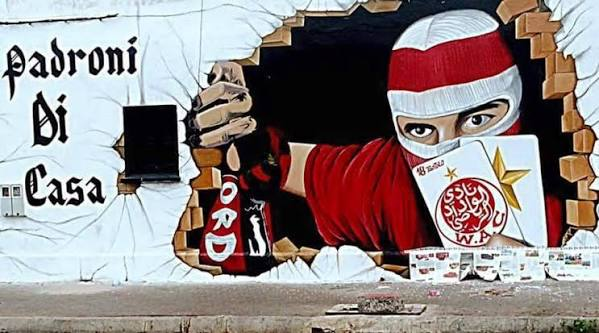
Founded in 1937, Wydad Athletic Club is one of Morocco’s oldest and most successful football clubs. Created during the French Protectorate, the club quickly became a symbol of Moroccan pride and resistance, Over the decades, Wydad has built a remarkable legacy, winning numerous Botola league titles, Throne Cups, and continental trophies, including the CAF Champions League.
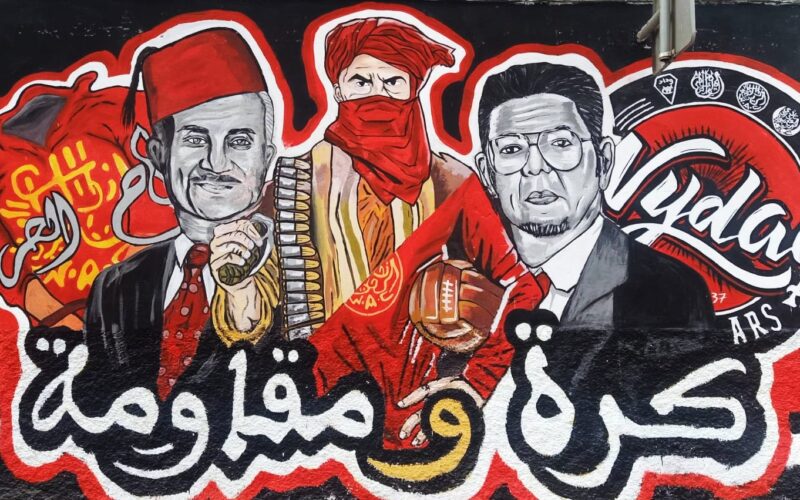
Wydad Athletic Club’s street art is instantly recognizable through its bold use of red, white, and black. Murals often feature the club’s iconic crest, championship trophies, and portraits of legendary players who have shaped Wydad’s history. The artwork reflects the club’s status as one of Morocco’s most decorated teams, celebrating domestic league titles, continental success, and memorable victories.
Raja Club Athletic
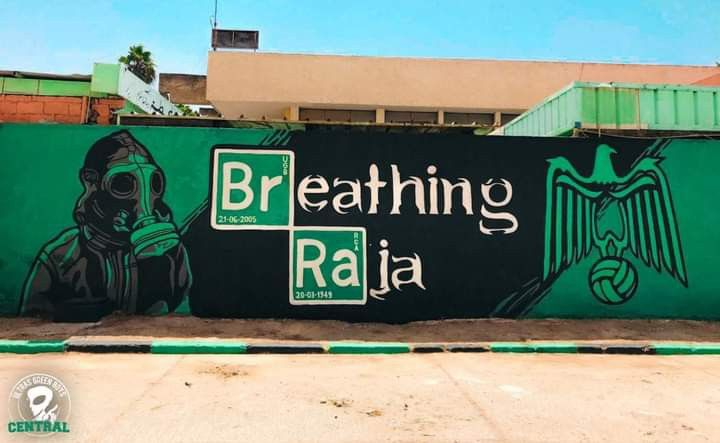
Founded in 1949, Raja Club Athletic has grown into one of Africa’s most respected football clubs. Established after World War II by Moroccan nationalists, Raja became known as the “people’s club,” building a passionate fan base rooted in Casablanca’s neighborhoods. The club has enjoyed great success both domestically and internationally, winning multiple Botola titles, CAF Champions League trophies .
Raja Club Athletic’s street art is dominated by green and white, reflecting the club’s identity and strong connection with its supporters. Raja murals frequently showcase the club’s famous eagle, one of the most recognizable symbols in Moroccan football, alongside the club crest and portraits of legendary players.
AS FAR
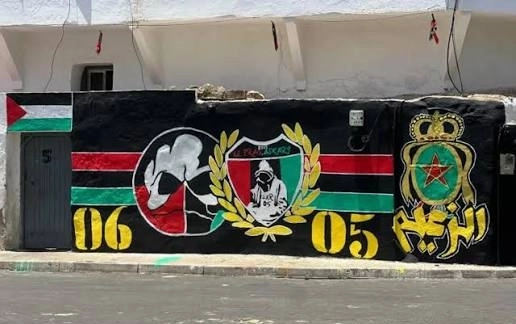
Founded in 1958 in Rabat, AS FAR is one of Morocco’s most historic and successful football clubs. Established by the Royal Armed Forces, the club has built a reputation for discipline, excellence, and consistency.
Unlike many football murals that focus solely on rivalry, AS FAR’s street art often highlights the club’s long history, discipline, and national significance. Supporters use large-scale murals to commemorate league titles, continental triumphs, and iconic moments that have shaped the club’s identity
The Cultural Impact of Football Street Art
Football is one of the most important aspects of Moroccan culture, and its influence extends far beyond the stadium. Across the country, the passion for the game is reflected on the streets through vibrant murals and graffiti, transforming ordinary walls into symbols of pride, identity, and community. Football street art has become one of the most visible expressions of how deeply Moroccans love and support the sport.
Beyond the ninety minutes of a match, supporters dedicate countless hours to designing and painting murals that celebrate their clubs. These artworks demonstrate that football fans are much more than spectators. Many are talented artists who use their creativity to contribute to their communities while honoring the teams they love. Through their work, they preserve club history, commemorate legendary players, and inspire future generations of supporters.
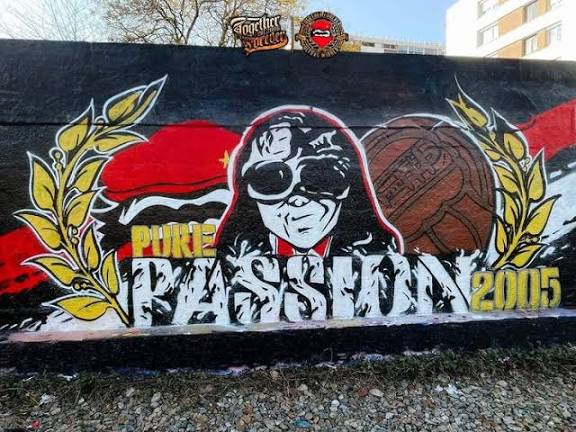
Football street art also challenges the stereotypes often associated with football fans. Rather than being viewed simply as passionate supporters, many ultras and fan groups have become recognized for their artistic talent, transforming neglected walls into meaningful works of public art. Their murals brighten neighborhoods, strengthen local identity, and create spaces where people can appreciate both football and creativity.
Beyond football, these murals contribute to the visual identity of Moroccan cities. In Casablanca, Rabat, Tangier, Berkane, Fès, and other football-loving cities, colorful artworks have transformed neighborhoods into open-air galleries. They attract photographers, artists, football enthusiasts, and even tourists interested in experiencing the country’s unique supporter culture.
Street art and the message it delivers outside of football
The artists behind Morocco’s football murals are often supporters, ultras members, and local graffiti artists who use their creativity to express their passion for the game. During a match, supporters come together to cheer for their club, setting aside daily concerns to experience a sense of unity and belonging.
However, football is more than just entertainment. While the excitement of the match may last only ninety minutes, the realities of everyday life remain. For this reason, some ultras groups have chosen to combine football with artistic and social expression. Through murals, graffiti, banners, and tifos, they celebrate their clubs while also addressing issues that affect their communities.
Many football murals in Morocco are found in working-class neighborhoods, where clubs have deep historical roots and strong community ties. As a result, the artwork often reflects the experiences, hopes, and challenges of the people who live there.
Final thoughts
Football is more than just a sport in Morocco it is a powerful force that brings together people from different backgrounds, generations, and communities through a shared passion for their clubs. While the excitement of a match may last only ninety minutes, the dedication of supporters continues long after the final whistle.
Through murals and graffiti, Moroccan football fans transform ordinary streets into vibrant expressions of loyalty, creativity, and identity. Every painted wall tells a story, whether it celebrates a historic victory, honors a legendary player, or reflects the unwavering support of the ultras. These artworks preserve the history of clubs such as Wydad AC, Raja CA, AS FAR, and many others, ensuring that their legacies remain visible for future generations.