





From the first sketch to the first client, here’s everything every aspiring interior designer should know.
Interior design school teaches you how to think creatively, communicate ideas, and solve spatial problems. It introduces you to colour theory, ergonomics, materials, lighting, technical drawings, and design history. But once you step outside the classroom, you quickly realise that becoming a successful designer requires much more than mastering a software program or delivering a beautiful presentation.
The transition from student to professional is often filled with uncertainty. How do you build a portfolio? Which software should you prioritise? Where can you find internships? How do you network with professionals? And perhaps most importantly, how do you continue growing after graduation?
Whether you’re in your first semester or preparing to enter the industry, this interior design student guide brings together the essential lessons, resources, and habits that will help you build a rewarding career in interior design.
Table of Contents
Think Like a Designer, Not Just a Student
One of the biggest shifts every student must make is understanding that interior design is not about making spaces look beautiful, it is about making them work.
A successful designer begins every project by asking questions before proposing solutions. Who will use the space? How will they move through it? What emotions should it evoke? How does natural light change throughout the day? What materials are appropriate for the climate, the budget, and the client’s lifestyle?
Learning to observe is just as important as learning to draw.
The next time you visit a café, hotel, museum, airport, or restaurant, don’t simply enjoy the space. Analyse it. Study how people interact with the furniture, how circulation flows, how lighting influences the atmosphere, and how materials age over time. Every space becomes a classroom when viewed through the eyes of a designer.
Build Your Digital Toolbox
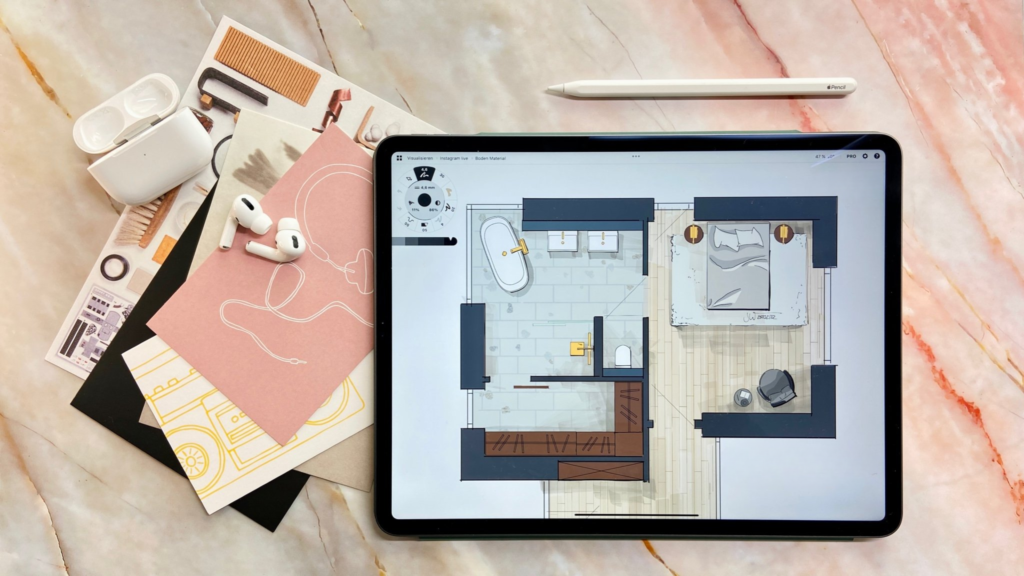
Today’s interior designers are expected to move seamlessly between concept sketches and digital workflows.
While every studio has its own preferred software, there are several industry standards that every student should become familiar with.
AutoCAD remains essential for technical drawings and construction documentation, while SketchUp continues to be one of the most accessible tools for 3D modelling and concept development. For projects requiring Building Information Modelling (BIM), Revit has become increasingly valuable, particularly for multidisciplinary collaboration.
Students interested in advanced modelling may also explore Rhino, especially when combined with Grasshopper for parametric design. For visualisation, rendering software such as Enscape, V-Ray, Lumion, and Twinmotion can transform concepts into immersive presentations.
Don’t overlook graphic design and communication tools either. Adobe Photoshop, Illustrator, and InDesign remain indispensable for presentation boards, portfolios, and publications.
At the same time, continue sketching by hand. Digital tools may evolve, but the ability to communicate ideas quickly with pencil and paper will always remain one of a designer’s greatest strengths.
Let Artificial Intelligence Work With You
Artificial intelligence is rapidly changing the creative industry, and interior design is no exception.
Rather than replacing designers, AI is becoming a powerful assistant capable of accelerating research, brainstorming concepts, generating mood boards, organising specifications, writing client presentations, and even assisting with space planning.
Tools such as ChatGPT can help develop design concepts, prepare project narratives, or organise research. Platforms like Midjourney and Adobe Firefly allow designers to visualise ideas during the early conceptual stages, while image enhancement tools can improve presentation quality before client meetings.
The most successful designers will not be those who resist AI, but those who learn to integrate it thoughtfully into their creative process while maintaining originality and critical thinking.
Build Your Portfolio From Day One
Many students wait until graduation to create a portfolio.
By then, they are often overwhelmed by years of files scattered across different folders, forgotten sketches, and unfinished projects.
Instead, begin documenting your work from your very first project.
Save every presentation, photograph every physical model, organise your drawings, and keep track of your design process, not just the final result. Employers are increasingly interested in understanding how you think, not simply what you produce.
A strong portfolio tells a story. It should demonstrate your ability to research, analyse, solve problems, and communicate ideas clearly.
Quality will always be more valuable than quantity.
Learn Beyond the Classroom

University provides a foundation, but lifelong learning is what shapes exceptional designers.
Follow architecture and design publications such as ArchDaily, Dezeen, Designboom, Architonic, Yatzer, and, of course, YAZ Magazine to stay informed about emerging trends, innovative materials, and inspiring projects from around the world.
Reading books is equally important. Classics such as The Interior Design Handbook by Frida Ramstedt, The Design of Everyday Things by Don Norman, and A Pattern Language by Christopher Alexander offer insights that remain relevant regardless of changing trends.
Podcasts, webinars, online courses, and design exhibitions can become just as valuable as formal lectures.
The best designers never stop being students.
Experience Design in the Real World
Some of the most valuable lessons happen outside the studio.
Visit furniture showrooms, ceramic manufacturers, textile suppliers, lighting exhibitions, hotels, heritage buildings, and local workshops. Observe how materials feel, how furniture is constructed, and how craftsmanship influences quality.
If you have the opportunity, request material samples from manufacturers. Many companies provide student sample kits that allow you to build your own material library, an invaluable resource for future projects.
Travel whenever possible. Every city offers new perspectives on space, culture, and design.
Here is a video that can make closer to the life of an interior designer!
Competitions Can Change Your Career
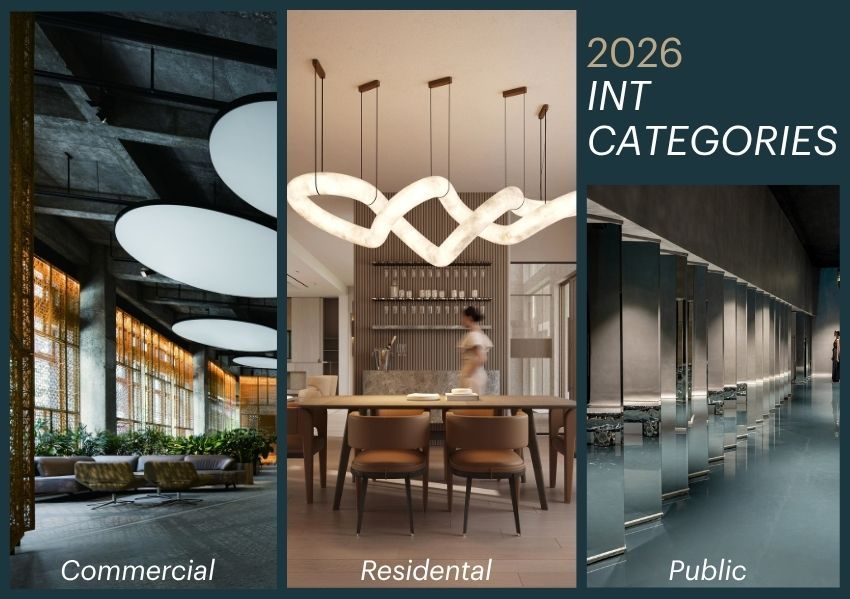
Design competitions push students beyond academic assignments.
They encourage experimentation, strengthen portfolios, and provide international exposure. Even if you don’t win, participating demonstrates initiative, creativity, and the ability to work under real-world deadlines.
Likewise, internships provide insights that no classroom can replicate. Working alongside architects, contractors, suppliers, and clients teaches communication, teamwork, budgeting, and project coordination, skills that are essential in professional practice.
Don’t wait for opportunities to find you. Reach out to local studios, introduce yourself, and share your portfolio. Many careers begin with a simple email.
Build a Professional Network Early
Interior design is a collaborative profession.
The relationships you build today may become future employers, collaborators, clients, or mentors.
Create a professional LinkedIn profile. Attend architecture festivals, design weeks, exhibitions, and industry conferences. Introduce yourself to speakers, ask thoughtful questions, and stay connected after the event.
Networking isn’t about collecting contacts, it’s about building genuine professional relationships based on curiosity, generosity, and shared interests.
Join Communities That Support Your Growth
Professional organisations can provide mentorship, networking opportunities, competitions, research, and access to global conversations shaping the future of design.
The International Union of Architects (UIA) promotes collaboration between architects worldwide through national member organisations and specialised commissions.
Students interested in heritage conservation may find valuable opportunities through ICOMOS, while DOCOMOMO International welcomes those passionate about documenting and preserving modern architecture.
For students exploring digital workflows, Women in BIM offers free educational resources, webinars, and mentoring programmes. Although created to support women in the industry, many of its educational events are open to a wider audience and offer valuable insights into BIM and digital construction.
Organisations such as ArchiTEXX continue to advocate for greater diversity and inclusion within architecture, providing leadership programmes, networking events, and research that benefits the profession as a whole.
Engaging with these communities early can broaden your perspective and introduce you to opportunities beyond your university.
The Habits That Separate Good Designers From Great Ones
Talent alone rarely defines a successful career.
The designers who leave a lasting impact are those who remain curious, organised, and committed to continuous improvement.
Develop the habit of sketching every day. Read widely beyond design. Learn about business, psychology, sustainability, photography, marketing, and technology. Improve your communication skills. Accept criticism with humility. Stay open to collaboration.
Most importantly, remember that every project is an opportunity to learn.
The industry will continue to evolve, new technologies will emerge, and trends will come and go. Curiosity, however, will always remain one of the most valuable tools a designer can possess.
Designing Your Own Future
And this is the end of our Interior Design Student Guide!
There is no single path to becoming an exceptional interior designer.
Some graduates will establish their own studios. Others will specialise in hospitality, residential design, heritage conservation, furniture design, or sustainable interiors. Many will discover passions they never expected while still at university.
What matters most is not having all the answers from the beginning, it is developing the mindset to keep asking better questions.
Build your portfolio with intention. Learn continuously. Seek mentorship. Explore the world with a designer’s eye. Embrace new technologies without losing sight of craftsmanship and human experience.
Because the spaces you will one day create have the power to shape how people live, work, heal, gather, and dream.
And every remarkable designer begins exactly where you are now: as a curious student with a sketchbook full of possibilities.