

From the industrial Casablanca tumbler to the handcrafted Beldi glass and the decorative Aanba tea glass, discover how three humble drinking vessels reflect Morocco’s rich traditions of design, craftsmanship, and hospitality.
A drinking glass is one of the most ordinary objects in our homes, yet it often goes unnoticed. We reach for it several times a day without considering its shape, its craftsmanship, or the story behind its design. In Morocco, however, some of the most familiar glasses are far more than simple vessels. They embody centuries of tradition, evolving lifestyles, and a deep appreciation for hospitality.
The Casablanca tumbler, the Beldi glass, and the Aanba tea glass each represent a different chapter in Morocco’s design heritage. One celebrates industrial innovation, another reflects the beauty of handmade craftsmanship, and the third transforms the ritual of serving tea into an art form. Together, they demonstrate that even the simplest everyday objects can tell extraordinary stories.
Table of Contents
The Casablanca Glass: Beauty Through Function
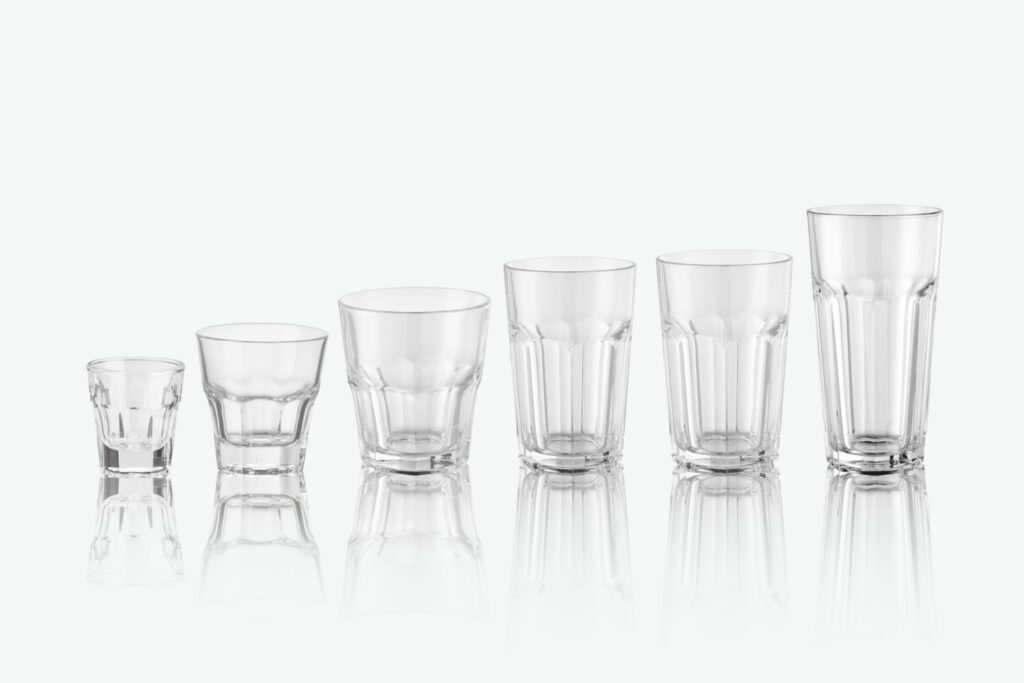
Few drinking glasses are as instantly recognizable as the Casablanca tumbler. Found in cafés, restaurants, and homes around the world, it has become a benchmark of practical design.
Its thick walls, faceted sides, and slightly tapered silhouette were not created simply for aesthetic appeal. Every detail serves a practical purpose. The vertical facets provide a secure grip, even when condensation forms on the outside of the glass. The tapered shape allows several glasses to stack neatly, saving valuable storage space in busy cafés and kitchens. Its thick, weighted base gives the glass excellent stability while making it remarkably resistant to everyday wear.
Although many people assume it originated in Morocco because of its name, there is little historical evidence to support that claim. Most historians believe the name “Casablanca” was chosen because the city symbolized cosmopolitan elegance, café culture, and modern living during the twentieth century.
The Casablanca glass is a perfect example of industrial design at its best. It is not admired because it is elaborate, but because it performs exceptionally well. Its durability, affordability, and ergonomic form have allowed it to remain popular for decades.
Its only real limitation is that its industrial precision leaves little room for individuality. Every glass is identical, and while that consistency is ideal for commercial use, it lacks the warmth and personality of handcrafted objects.
The Beldi Glass: Handmade Simplicity
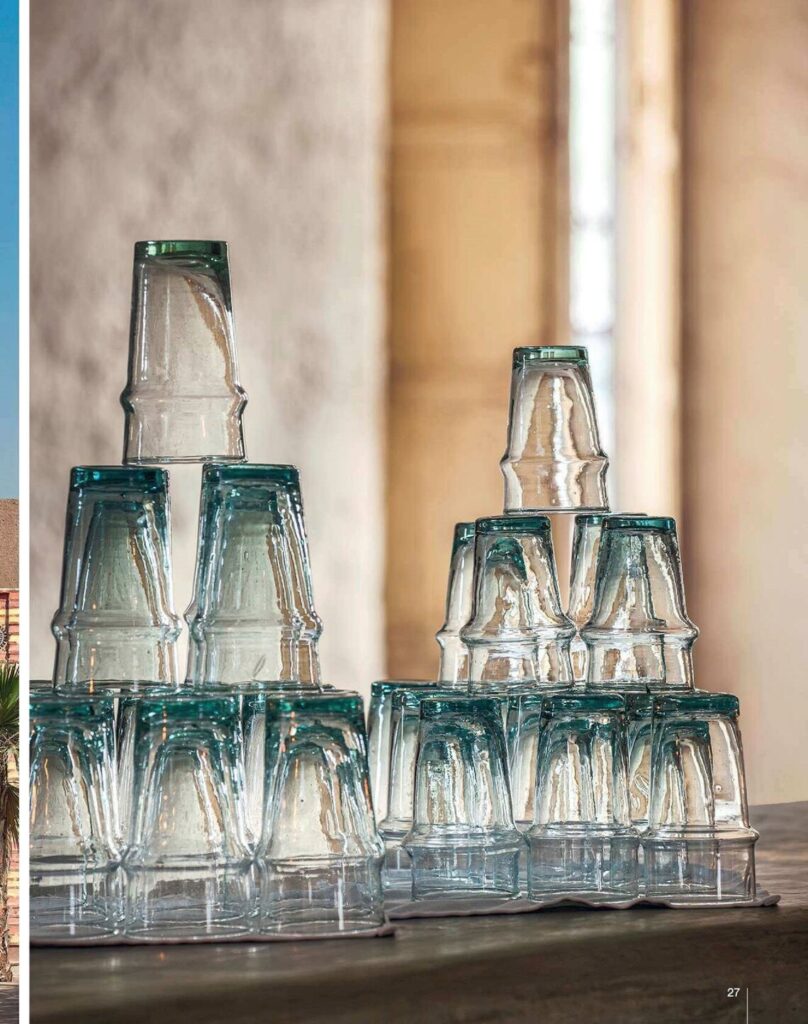
Where the Casablanca glass celebrates precision, the Beldi glass celebrates character.
The word beldi means “traditional” or “local” in Moroccan Arabic, and nothing captures that spirit more faithfully than this humble handcrafted glass. Traditionally made from recycled glass, every Beldi piece bears subtle differences in shape, thickness, and texture. These small irregularities are not imperfections but visible reminders of the artisan’s hand.
Its design is wonderfully understated. The gently rounded form fits comfortably in the hand, while the thin rim creates a pleasant drinking experience. Many Beldi glasses display a soft green or blue tint, the natural result of recycled glass rather than artificial colouring.
Long before sustainability became a global movement, Moroccan artisans were giving discarded materials a second life. The Beldi glass stands today as one of Morocco’s earliest examples of environmentally conscious design.
Unlike mass-produced glassware, every Beldi glass possesses its own personality. That uniqueness is precisely what has attracted architects, interior designers, and collectors around the world.
Of course, craftsmanship comes with compromises. Handmade glass is generally less resistant to impacts than tempered industrial glass, and slight variations make perfect stacking impossible. Yet these characteristics are often considered part of its charm rather than its weakness.
You can purchase your beldi glass from Le Verre Beldi or Moroccan Home, and if you’re in Morocco, it’s even better to buy them from local craftsmen and stores.
The Aanba Tea Glass: The Art of Hospitality
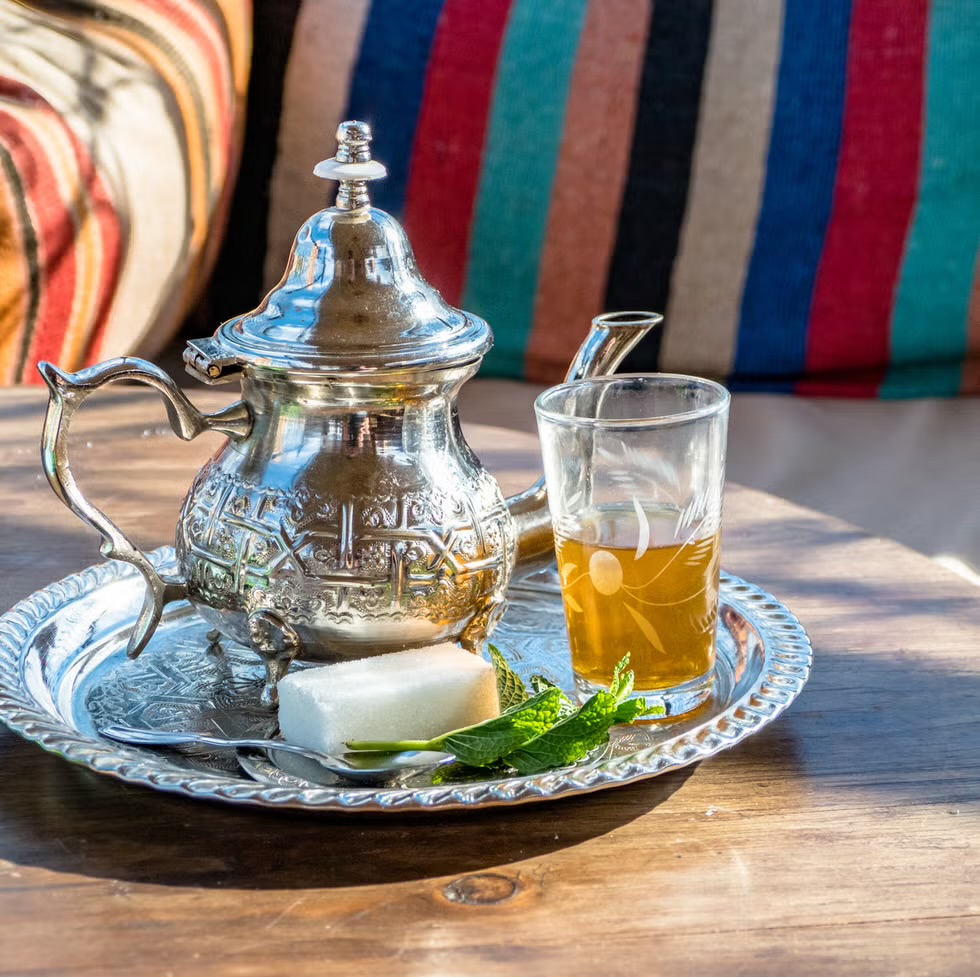
If the Beldi glass is admired for its simplicity, the Aanba tea glass is celebrated for its ornamentation.
For generations, it has been inseparable from the Moroccan tea ceremony, where serving tea is not simply about offering a drink but about expressing generosity, respect, and welcome.
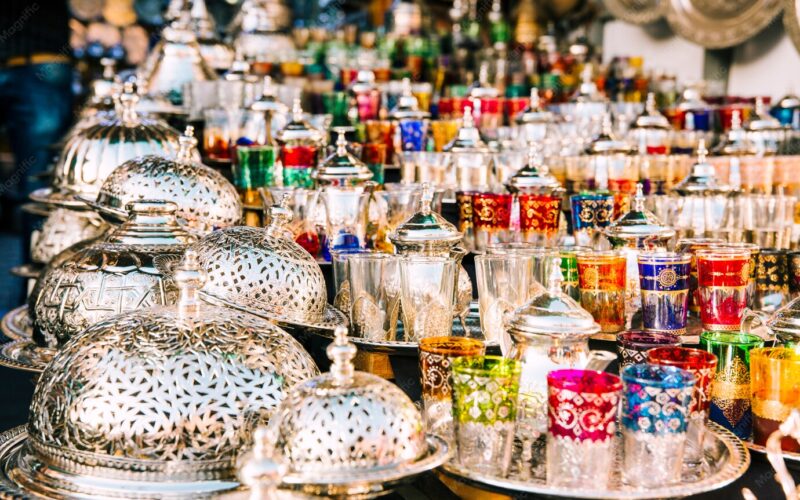
The name Aanba is believed to be linked to the Arabic word for grapes, reflecting the grapevine motifs that traditionally decorate many of these glasses. Over time, artisans expanded their decorative vocabulary to include floral compositions, geometric patterns, gilded borders, and vibrant enamel colours inspired by Morocco’s rich artistic traditions.
Unlike the Casablanca glass, whose beauty lies in its form, or the Beldi glass, whose appeal comes from its material and craftsmanship, the Aanba glass derives its identity from decoration. Every painted motif contributes to the visual experience of serving tea.
Its delicate proportions and thin walls allow the amber colour of freshly brewed mint tea to glow through the glass, while the decorative patterns frame the drink almost like a work of art.
These glasses require more careful handling than industrial tumblers, but their beauty lies precisely in that sense of refinement. They were never intended for hurried meals or busy restaurants. They belong to moments of conversation, celebration, and shared hospitality.
Three Different Visions of Good Design
Although all three glasses perform the same basic function, each reflects a different philosophy of design.
The Casablanca glass demonstrates how industrial engineering can improve everyday life through durability, ergonomics, and efficiency. It proves that good design often begins with solving practical problems.
The Beldi glass reminds us that true beauty does not require perfection. Its slight irregularities, recycled materials, and handcrafted character celebrate authenticity while preserving one of Morocco’s most enduring artisanal traditions.
The Aanba tea glass, meanwhile, shows that design can also be emotional. Its delicate decoration transforms the simple act of serving tea into a gesture of elegance and hospitality, expressing values that have long defined Moroccan culture.
None of these glasses is superior to the others. Each was created for a different purpose, and each succeeds beautifully on its own terms.
More Than Everyday Objects
The objects we use every day often reveal more about us than we realize. They reflect our traditions, our lifestyles, and the values we choose to preserve.
The Casablanca tumbler tells the story of modern industrial design.
The Beldi glass speaks of sustainability, craftsmanship, and authenticity.
The Aanba tea glass celebrates Morocco’s artistic heritage and its timeless culture of hospitality.
Together, they remind us that good design is not measured only by appearance or function. It is measured by the stories it carries, the memories it creates, and the generations that continue to use it.
The next time you raise a glass of water or share a cup of mint tea, take a moment to look more closely. You may discover that even the simplest object on your table is part of a much larger story, one that continues to shape Morocco’s design heritage today.