
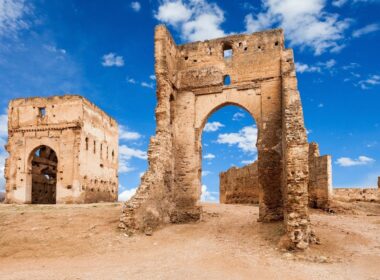
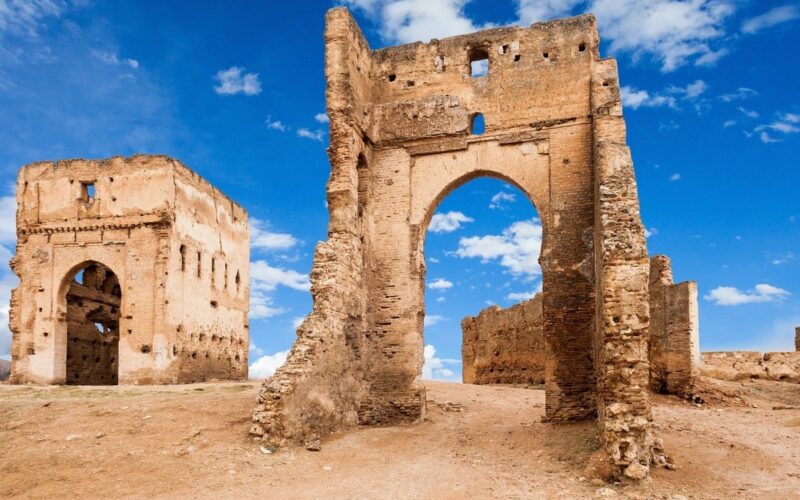
We all know that one building we pass by every day on our way to school or work ,the one that stands silent and abandoned, its walls weathered by time. Although no one seems to live there anymore, it’s easy to imagine how breathtaking it once was. Behind its cracked walls, faded colors, and broken windows lies a story waiting to be told.
In this blog, we’ll explore some of Morocco’s forgotten buildings, uncovering the stories behind each one and the people who once walked their halls, admired their beauty, and left their mark within their walls. Though many of these places have been abandoned by time, they continue to stand as silent witnesses to Morocco’s rich history, remarkable architecture, and extraordinary craftsmanship.
Table of Contents
Kasbah of Telouet
The Kasbah of Telouet was originally built in the 18th century and expanded throughout the 19th and early 20th centuries. It served as the residence of the powerful Glaoui family, who controlled the caravan routes crossing the High Atlas Mountains between Marrakech and the Sahara.
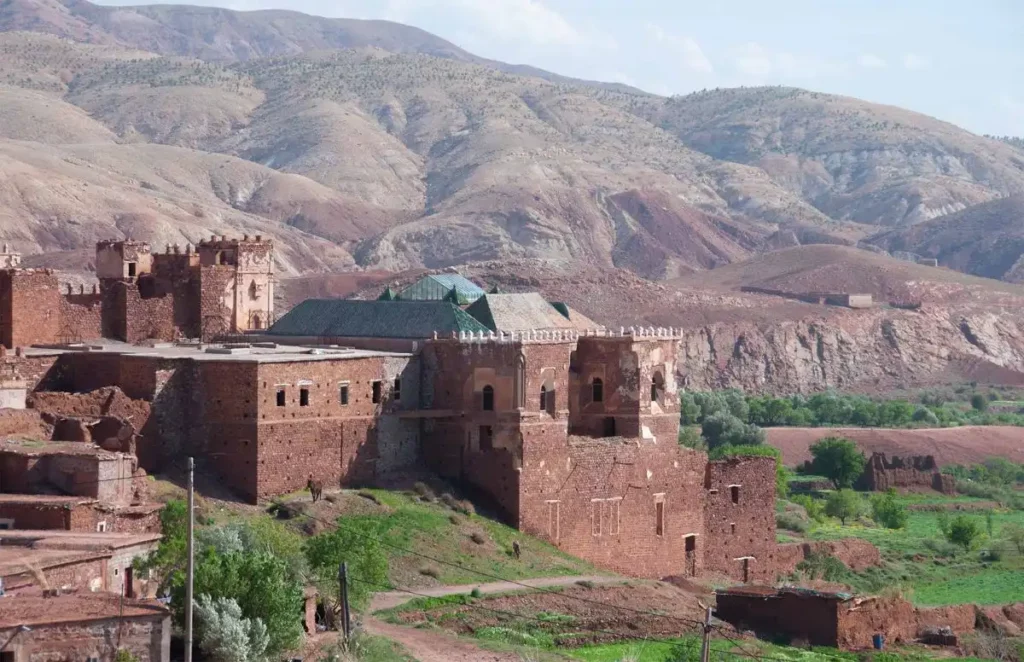
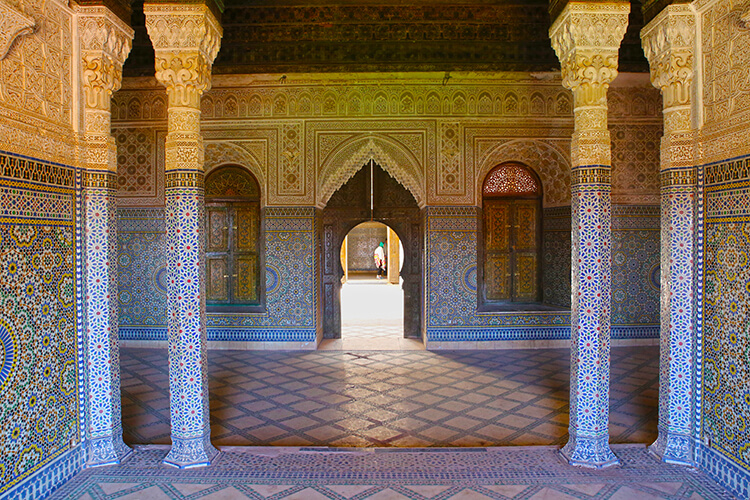
Although its exterior appears simple, the interior reveals remarkable craftsmanship, with colorful zellige mosaics, carved cedar wood ceilings, intricate stucco, and grand reception halls. Following Morocco’s independence in 1956, the Glaoui family’s political influence came to an end, and the kasbah was gradually abandoned. Despite years of neglect, it remains one of the finest surviving examples of traditional Moroccan palace architecture.
Palais Glaoui
- Fez
Built in the late 19th century, Palais Glaoui was one of the grand residences of the influential Glaoui family. Designed in the traditional Moroccan-Andalusian style, the palace featured expansive courtyards, elaborate zellige tilework, carved cedar wood, decorative plaster, that reflected the wealth and prestige of its owners and the beauty of Morocco.
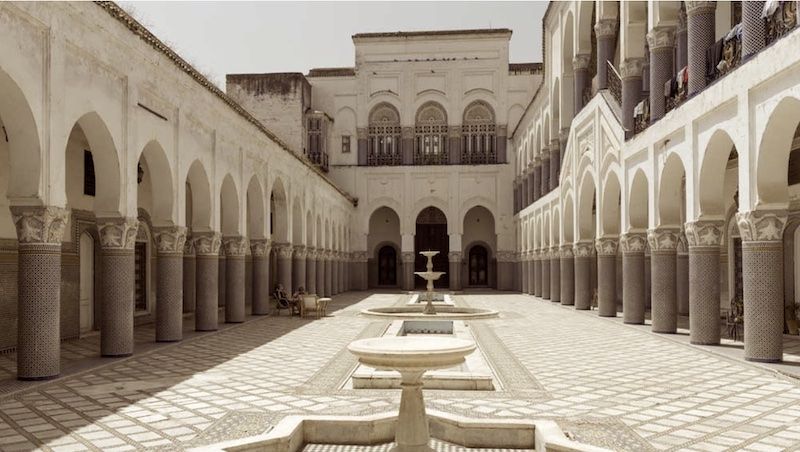
Over time, the palace was largely abandoned and suffered decades of neglect. While many sections have deteriorated, much of its exceptional craftsmanship remains visible, offering a glimpse into the elegance of Morocco’s historic palaces. Today, Palais Glaoui stands as both a symbol of Morocco’s architectural heritage and a reminder of the importance of preserving its historic buildings before they are lost forever.
Hotel Lincoln: A Second Chance for Morocco’s Architectural Heritage
Hotel Lincoln was built in 1917 on Mohammed V Boulevard in Casablanca during the French Protectorate. Designed by French architect Hubert Bride, it was among the city’s first luxury hotels and quickly became a symbol of Casablanca’s rapid urban and economic growth.
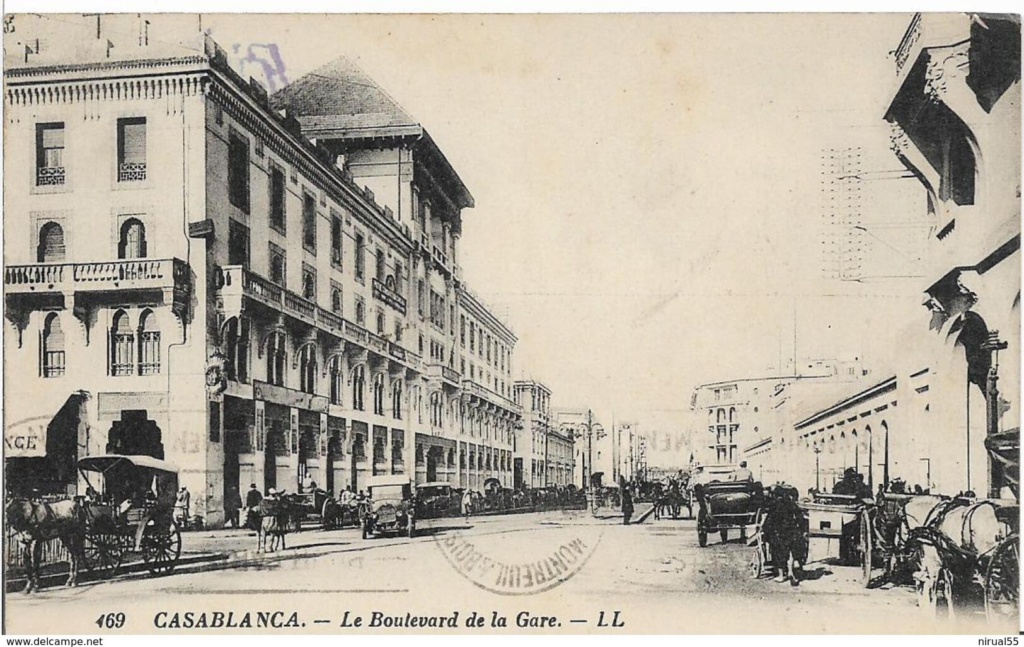
For decades, the hotel welcomed travelers, merchants, and diplomats from around the world. However, as the building aged and maintenance declined, its condition deteriorated significantly. By the late 20th century, Hotel Lincoln had been abandoned and became one of Casablanca’s most iconic neglected landmarks.
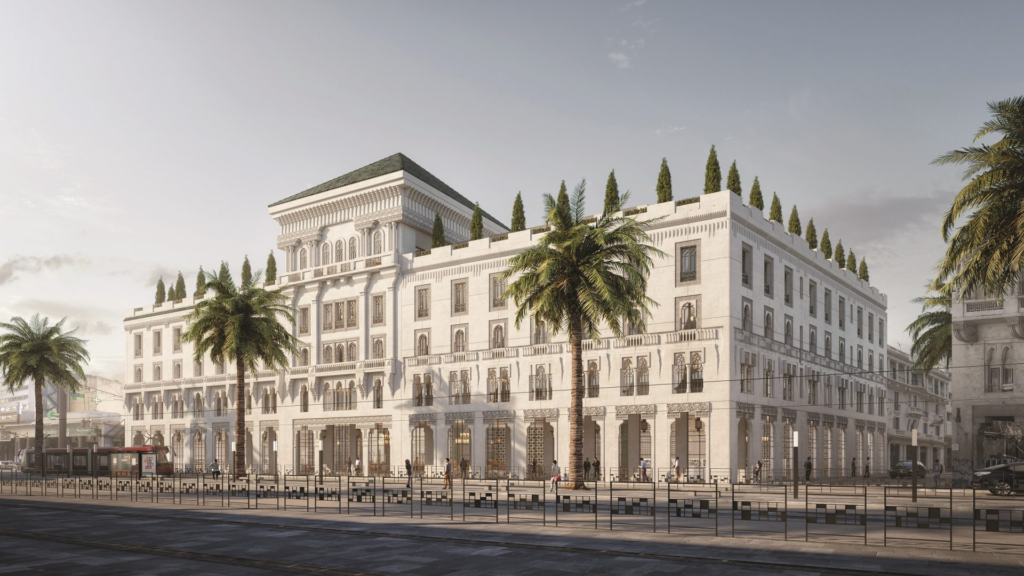
While many of Morocco’s historic buildings continue to face neglect, Hotel Lincoln in Casablanca offers a hopeful example of what preservation can achieve. After standing abandoned for decades, the iconic landmark became a symbol of the urgent need to protect the country’s architectural heritage. Rather than allowing it to disappear, restoration efforts were launched to preserve its historic façade while reinforcing the structure for future use.
Final thoughts
These buildings hold an important place in Morocco’s history. Their remarkable architecture, combined with the beauty of traditional Moroccan craftsmanship, makes them an essential part of the country’s cultural identity. Every carved cedar ceiling, intricate zellige mosaic, tells the story of the artisans who created them and the generations who lived within their walls.
Rather than allowing these architectural treasures to fall into further neglect, greater efforts should be made to preserve and restore them. Through collaboration between the government, the Ministry of Culture, local communities, and heritage organizations, these forgotten landmarks can be given a second life.
Protecting Morocco’s historic buildings is not only about saving old structures ,it is about preserving the nation’s history, celebrating its craftsmanship, and ensuring that future generations can continue to appreciate the beauty and legacy they represent.