
In a year that saw visionary and socially committed architectural practices recognised across the globe, two Moroccan-related projects stood out at the 2025 Ammodo Architecture Awards for their deep community impact, ecological sensitivity, and cultural resonance. From earthquake-resilient housing in the High Atlas region to a dynamic heritage-focused campus at the edge of the Sahara, these initiatives reflect how architecture can be both rooted in local realities and globally visionary.
Table of Contents
Redesigning Resilience: The Anti-Seismic House by Aziza Chaouni Projects
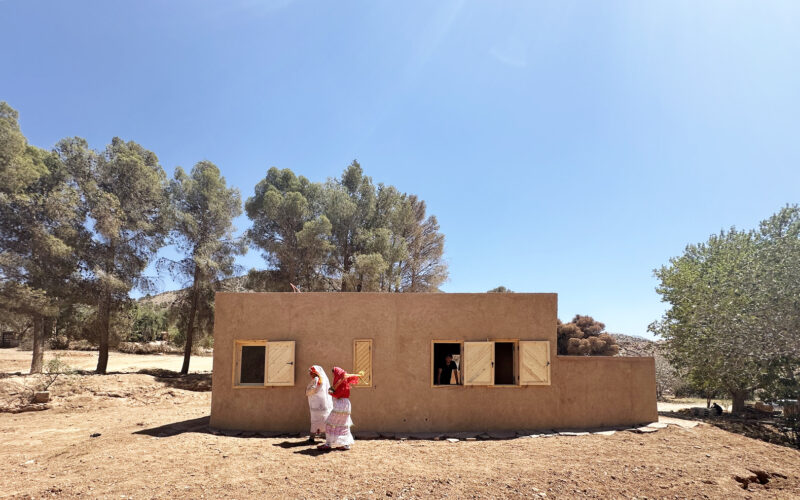
One of the most urgent challenges facing Morocco after the devastating earthquake of September 8, 2023, was how to rebuild homes that could both honour tradition and significantly improve safety and sustainability for rural families. Responding to this challenge, Aziza Chaouni Projects (ACP) developed a groundbreaking prototype of an anti-seismic house that earned the Ammodo Architecture Award for Social Engagement 2025.
This prototype is far more than a shelter; it is an architectural statement about community-centred design and resilience. Built in Talaat N’Yacoub in the Al Haouz province, a region devastated by the 2023 earthquake, the dwelling reinterprets the familiar courtyard house typology of rural Moroccan architecture while integrating innovations to enhance structural stability. The house uses compressed earth bricks engineered to be mortar-free and earthquake-resistant, combining local materials and techniques with developed anti-seismic performance.
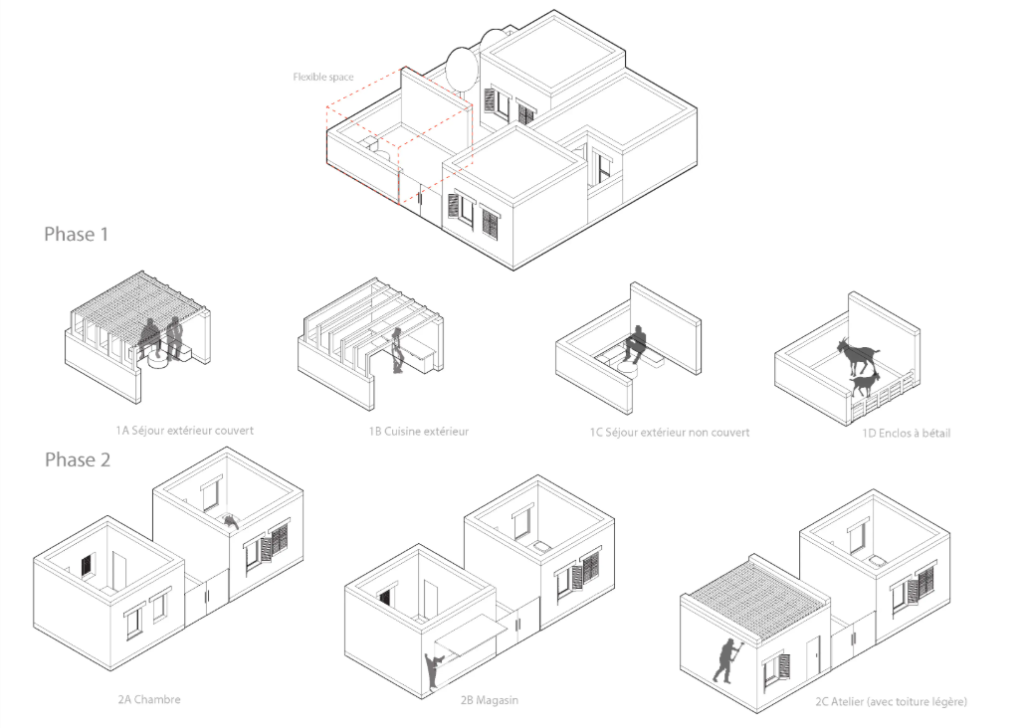
One of the project’s most striking features is how it was co-designed with local residents, involving women, young people, artisans, and authorities in shaping and refining the spaces. This collaborative process ensured that the prototype was not just technically robust but socially meaningful and culturally rooted. The layout includes three interlinked courtyards designed for social interaction, climate comfort, and diverse household functions: spaces for cooking, hosting, and even small-scale animal husbandry.
Aziza Chaouni herself brings a unique perspective to this work. As an architect, educator, and scholar, she is an Associate Professor of Architecture at the University of Toronto and founder of her multidisciplinary practice offices in Fez and Toronto. Her work spans sustainable architecture, heritage rehabilitation, and socially engaged design across Morocco and beyond. Projects from the firm often fuse historical insight with ecological innovation, from thermal bath restoration to urban adaptation projects.
In her acceptance of the Ammodo Architecture Award, Chaouni emphasised the project’s grounding in local materials and traditional skills, demonstrating how innovation can emerge from vernacular practice and community collaboration.
Reviving Oasis Heritage: Terrachidia Oasis Campus
While the Anti-Seismic House looks to the future of resilient housing, the Terrachidia Oasis Campus initiative honours and revitalises traditional craft, communal life, and the fragile ecosystem of the M’Hamid El Ghizlane oasis in southeastern Morocco. This project, led by Terrachidia NGO, a collective of heritage specialists and local partners, received the Ammodo Architecture Award for Local Scale 2025 for its holistic approach to architectural heritage and community empowerment.
Situated on the desert’s edge, the oasis landscape faces acute pressures, including desertification, population shifts, and environmental stressors. Responding to these challenges, Terrachidia has fostered a dynamic program of annual restoration workshops, which bring together local craftsmen, international participants, and specialists in heritage conservation. These workshops focus on restoring significant public spaces, such as courtyards and gateways, while transmitting vernacular building techniques rooted in earth, wood, and palm structures.
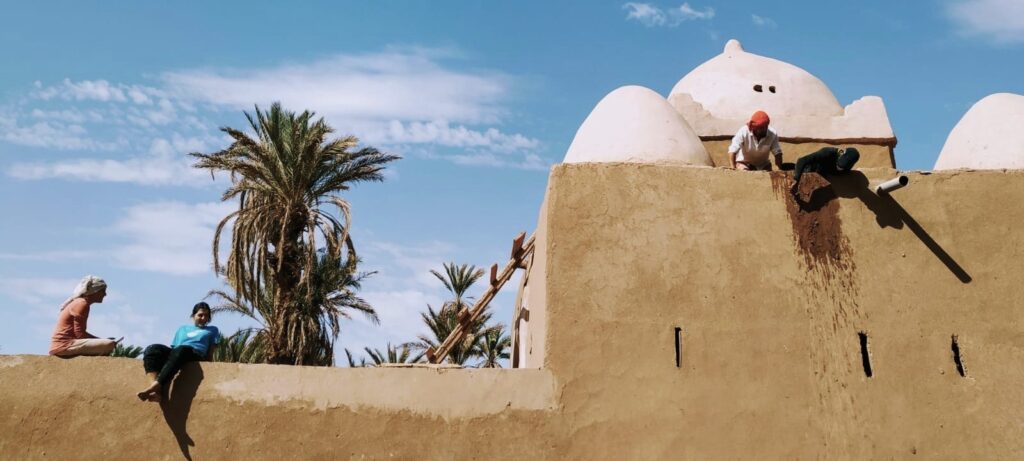
What distinguishes this project is its integrated methodology: tangible restoration work goes hand in hand with cultural exchange, hands-on training, and community empowerment. Rather than imposing external standards, Terrachidia’s interventions leverage local knowledge and materials, reinforcing a sense of pride and agency among participants. The initiatives also weave in intangible heritage, from women’s craft traditions to knowledge about oasis ecology.
With the support of the Ammodo award, Terrachidia plans to expand its training modules, deepen structural skill development with master builders, and extend outreach programming designed to amplify North African architectural traditions within and beyond the oasis.
Architecture as Collective Action
Both Moroccan projects exemplify a broader shift within contemporary architecture: from iconic form-making to deeply collaborative, socially responsive practice. Whether it’s designing housing that can save lives or revitalising cultural heritage in an endangered landscape, architecture is positioned as a medium for community resilience, ecological harmony, and cultural continuity.
In conversation with Terrachidia NGO Team / Oasis Campus
1. What inspired the creation of the Terrachidia Oasis Campus, and how has the project evolved?
Terrachidia was born from a sense of emptiness within contemporary architecture and its processes. We felt that something essential was missing, a disconnection from the roots and the memory of places. This drive led us to immerse ourselves in territories where tradition and ancestral knowledge are still very much alive. What began as a search for these values has consolidated into the Oasis Campus, a program that protects cultural landscapes and highlights the indissoluble triad between architecture, inhabitants, and the environment.
2. How do you balance heritage preservation with contemporary community needs?
Our interventions always stem from an attitude of active listening. We do not impose solutions; instead, we work shoulder-to-shoulder with local communities. We believe that heritage is a tool for the future; therefore, our strategies are based on understanding their current demands to create social fabrics that value and commit to their own cultural and natural resources.
3. A memorable moment reflecting your collaborative approach.
Rather than a single moment, I would highlight the essence of all our workshops: the experience of building together.
Seeing local master builders share their expertise with participants from all over the world is the truest reflection of our approach. This collaboration, where learning is mutual and manual labor unites different cultures, is what defines our identity.
4. What impact has the project had on local identity and the economy?
Architectural and Technical Preservation: Our interventions are essential for the direct physical conservation and rehabilitation of local architectural heritage. However, the impact goes beyond the walls themselves: we are preserving the “living heritage” of traditional construction knowledge. In many of these regions, centuries-old techniques—such as earth and stone masonry or traditional carpentry—are at risk of being lost forever. By placing these ancestral skills at the center of our workshops, we ensure they are passed down to new generations, preventing the extinction of the local craft culture.
Economic Resilience, Sustainable Development and Circularity: Unlike industrialized construction, which often relies on imported materials and external contractors, our focus on traditional techniques ensures that 100% of the budget remains within the community. By using local materials (earth, stone, lime, wood) and hiring local master builders (maâlems), we stimulate a “kilometer zero” economy. This not only creates immediate jobs but also revitalizes specialized trades that were on the verge of disappearing, providing a sustainable livelihood for local artisans.
- Social and Cultural Strengthening: We work to reverse the “stigma” often associated with traditional architecture. By restoring these structures, we transform what was perceived as “old or obsolete” into a source of prestige and pride. This revaluation of local identity is crucial; it helps the community recognize their heritage as a unique asset in a globalized world.
- Youth Engagement and Interculturality: One of our most significant achievements is involving the younger generation. By participating in our workshops, local youth reconnect with their elders’ wisdom, positioning themselves as the new guardians of their own legacy. Furthermore, the intercultural exchange that occurs during our programs creates a powerful social bond. When participants from across the globe travel to these oases to learn these techniques, it sends a powerful message to the local community: “Your heritage is world-class and worth protecting.”
5. How do ecological challenges, such as desertification, shape your architectural strategies?
Our response lies in vernacular architecture. We utilize traditional systems that have proven, over centuries, to be perfectly adapted to the climate and the land. In a context of climate crisis, reclaiming the use of earth and local materials is not just an aesthetic choice, but a fundamental ecological resilience strategy for inhabiting areas threatened by desertification.
6. What are your aspirations for the next phase of Terrachidia? Our main goal is to increase our financial capacity to continue rehabilitating these and other at-risk sites, preventing their culture and architecture from disappearing. We aspire to hold more workshops that serve as engines for local economies and to continue building intercultural bridges through heritage restoration.
Together, these projects reveal a powerful architectural ethos emerging from Morocco, one that resists the notion of design as a top-down imposition and instead embraces it as a shared, evolving process. Whether rebuilding after disaster or safeguarding fragile cultural landscapes, the work of Aziza Chaouni Projects and Terrachidia demonstrates that meaningful architecture is not only measured by form or aesthetics, but by its capacity to listen, adapt, and empower.
As climate challenges intensify and communities worldwide grapple with displacement, resource scarcity, and cultural erosion, these initiatives offer more than local solutions, they present replicable models grounded in collaboration, material intelligence, and respect for place. In Morocco, architecture is not merely constructing buildings; it is cultivating resilience, restoring dignity, and sustaining living heritage for generations to come.
With thanks to the Terrachidia NGO team for their time and insights shared in this interview.
Explore our other blogs to stay up to date with the evolving architectural landscape across Morocco, North Africa, and beyond, where innovation and heritage continue to shape the future of design.